What ?
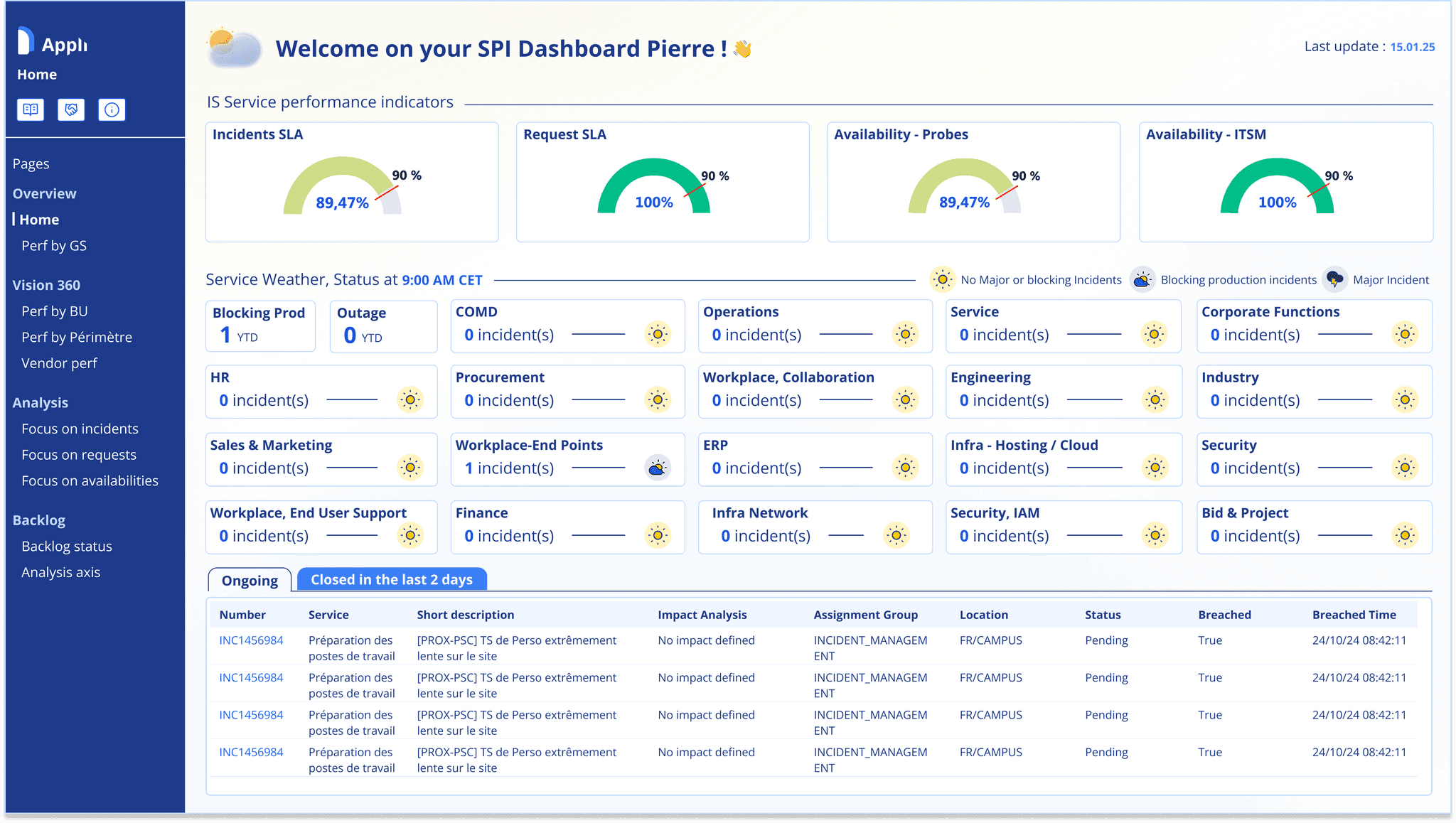
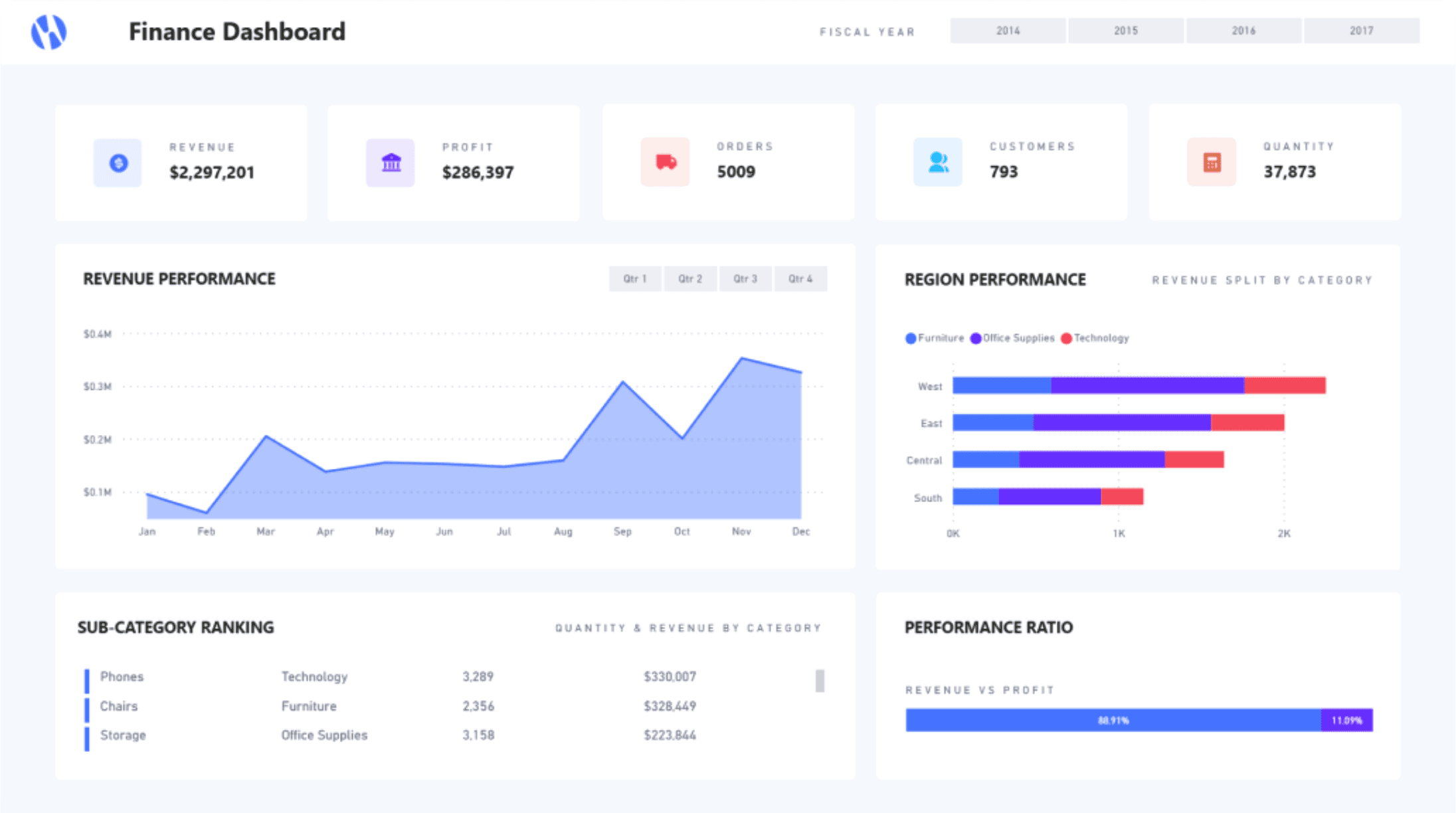
UX/UI redesign of a Power BI reporting tool for the IT governance teams of a major French company. SPIBI is a Power BI reporting tool dedicated to monitoring IT service performance. It centralizes key operational metrics: service availability rates, incident volume and tracking, request management, and backlog trends. It serves a range of business profiles — from Service Owner to Tribe Lead — who rely on it daily to monitor service quality, prepare steering committees, and make trade-off decisions. The challenge: make a digital service performance dashboard genuinely readable and actionable for both operational and strategic users.
Why ?
The tool existed, the data existed — but the experience was blocking analysis. Users were bypassing the BI tool altogether, manually exporting to Excel to rebuild their own charts. Filters weren't intuitive, components were inconsistent across pages, and several features (forecasting, comments, backlog) went unused due to lack of clarity. The tool was underused despite being meant as the daily control center for 4 distinct business profiles.
How ?
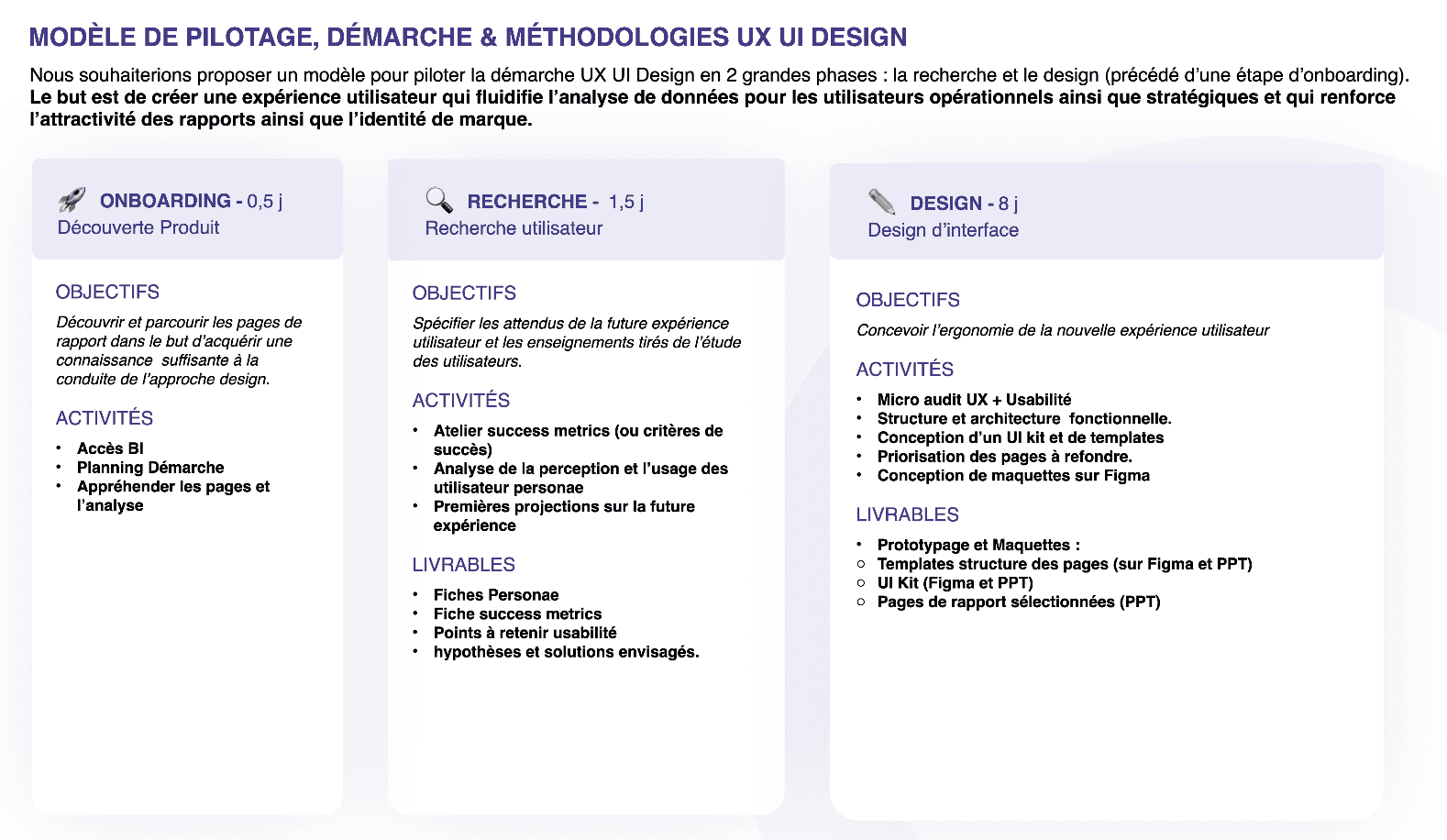
The engagement was structured in three phases:
Research — Workshops with 4 business profiles (Head of Production, Tribe Lead, Service Owner, Service Delivery Manager). Extracted verbatims, identified pain points, and defined success metrics per persona.
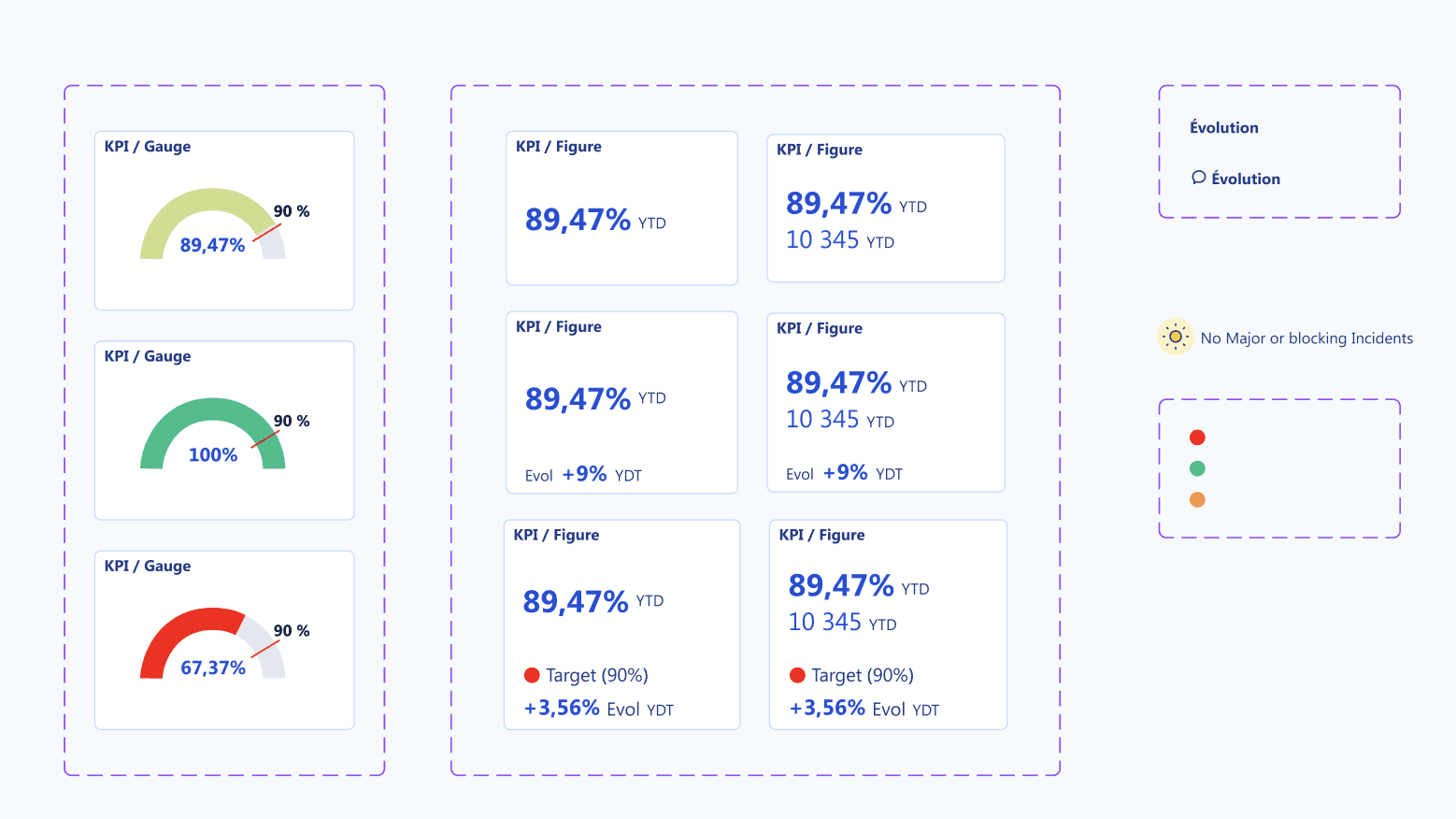
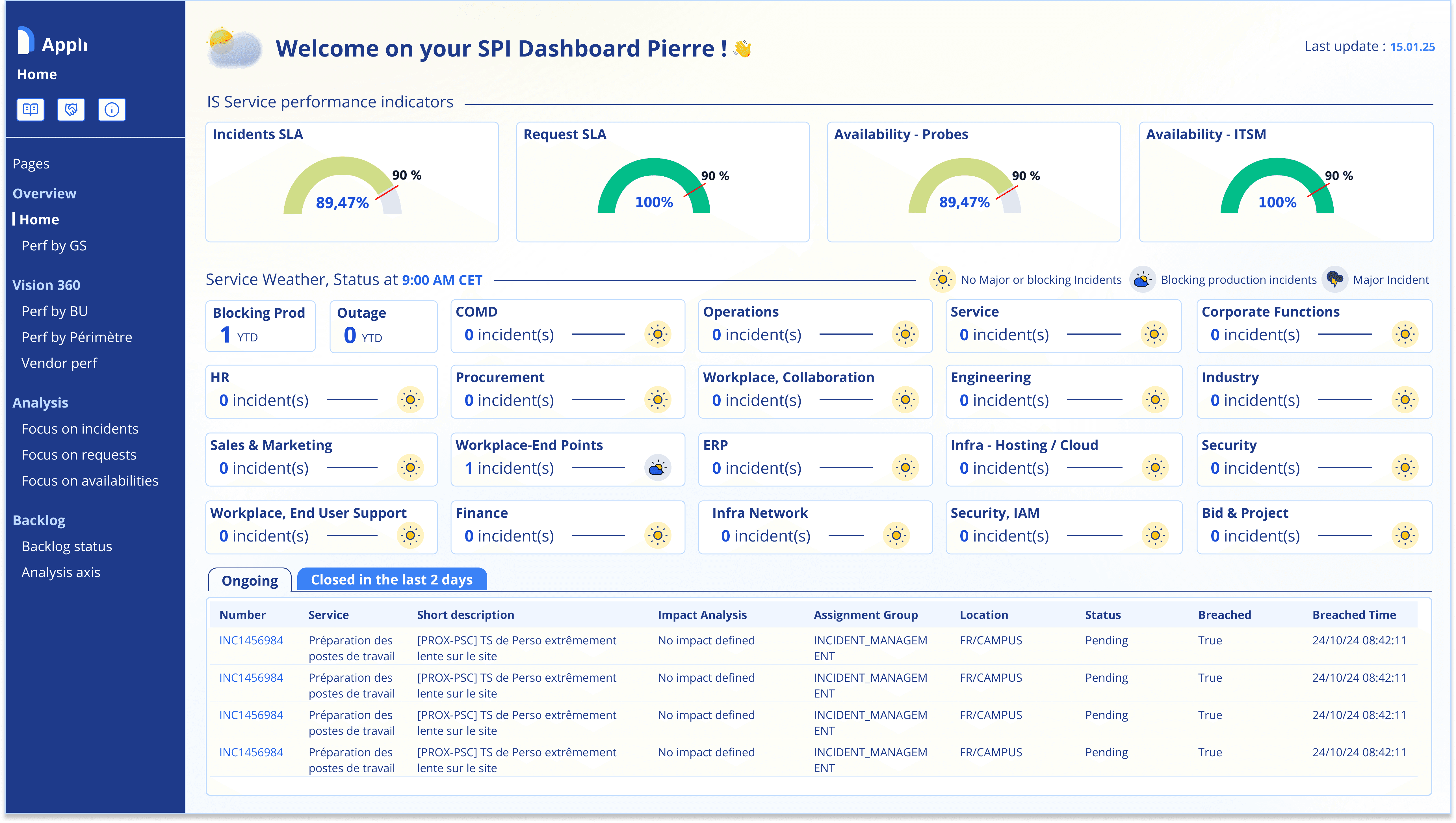
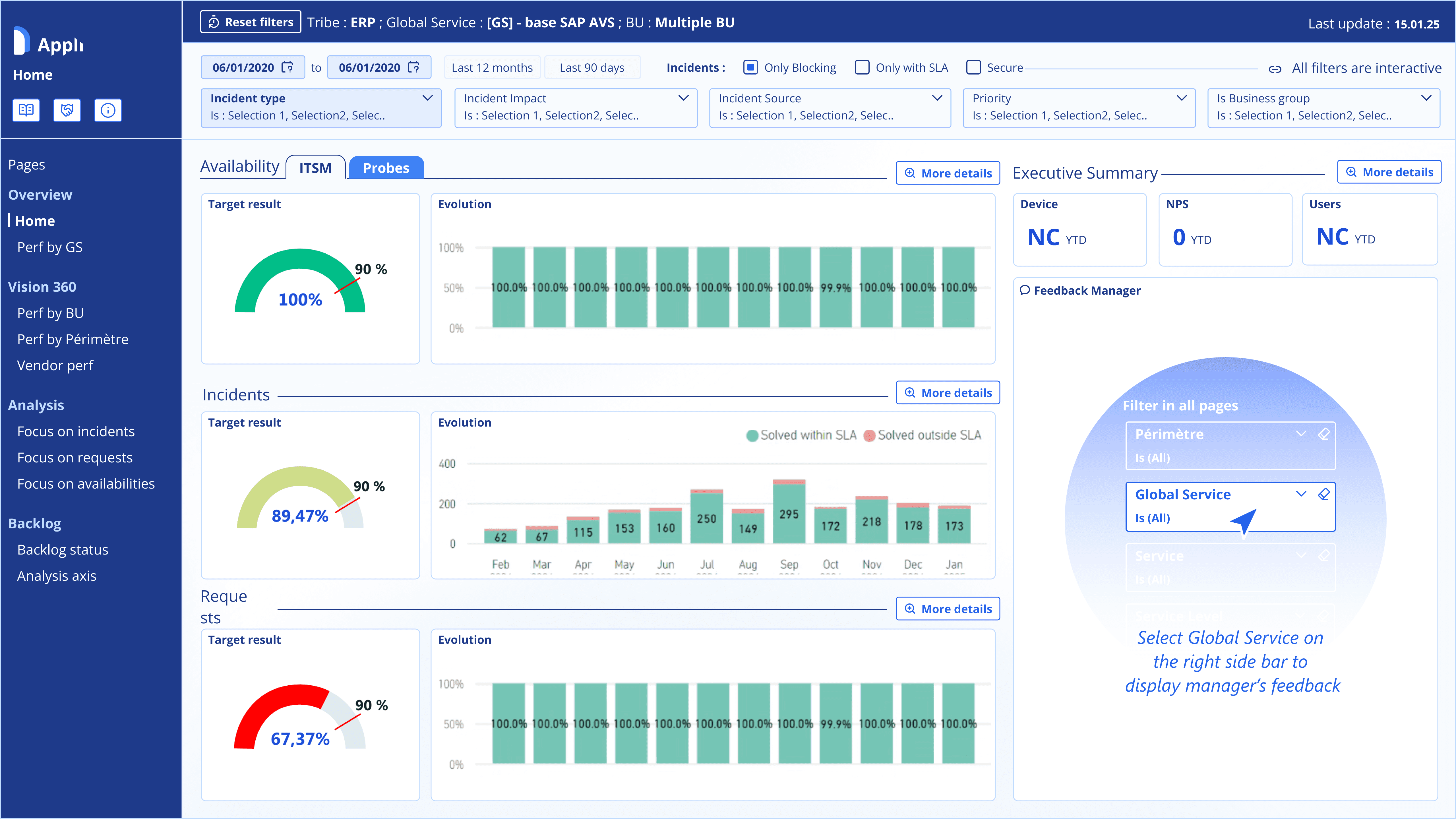
Design — Conducted a micro UX audit of the existing tool, then designed a full UI kit following atomic design principles: widgets, tiles, KPIs, filters, navigation. Restructured pages using a bento box layout, established information hierarchy, built a functional color system (dynamic vs. static blues), and streamlined tab-based navigation.
Delivery — 3 Power BI pages wireframed in Figma with an interactive prototype, front-end specs handed off to developers, and a reusable component library delivered to the team.
Outcome
The tool was being bypassed daily — users rebuilt their analyses in Excel because they couldn't properly leverage the BI tool. By the end of the engagement, each business profile had an interface designed around their actual needs: streamlined navigation, consistent components, actionable data with zero friction. The final deliverable was very well received by the client, who for the first time had a reusable component library and implementation-ready mockups.